Where beauty meets biodiversity
Sustainability, for Donnafugata, is a vision cultivated over time. For more than thirty years, the company has produced wines with respect for both the environment and people, guided by the belief that caring for the land means creating a virtuous balance between vineyard, landscape and biodiversity.
It is from this vision that the Donnafugata gardens take shape: green spaces conceived not as simple ornamentation, but as a cultural expression of a way of living in harmony with nature. Gardens, kitchen gardens, woodlands and pathways become places where people and the environment connect, and where beauty intertwines with memory, sustainability and sensory experience.
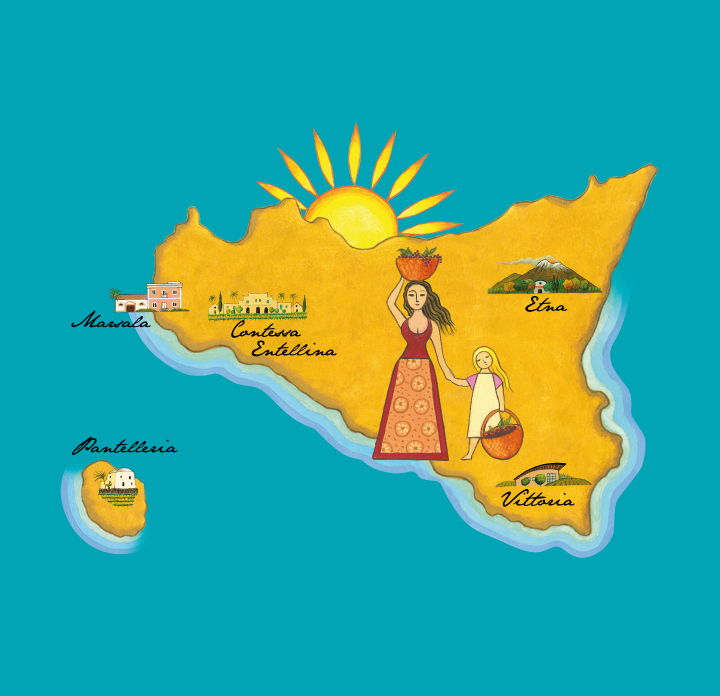
Each Donnafugata estate is home to a different project, designed in dialogue with the territory that surrounds it.
The Contessa Entellina garden
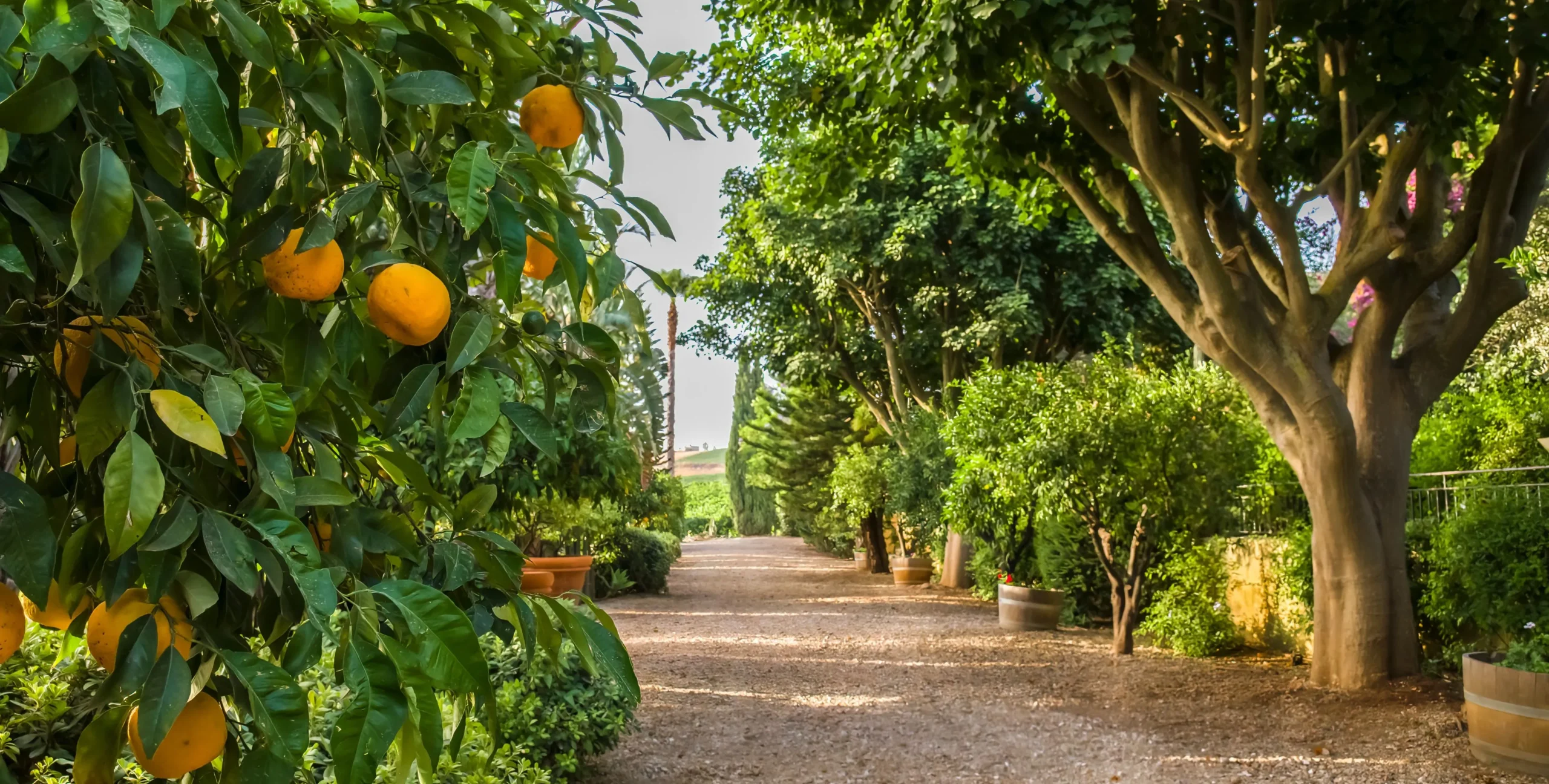
In the heart of western Sicily, among the hills of Contessa Entellina, the agricultural landscape forms an integral part of Donnafugata’s identity. Here, several decades ago, Gabriella Anca Rallo envisioned a green space capable of linking the house with the vineyards and the surrounding landscape.
From a carob tree and two olive trees grew a garden created in harmony with the natural contours of the land, arranged across three levels that guide the eye towards the cultivated fields. The upper level is home to species that symbolise Mediterranean culture, including olive, carob, lemon and prickly pear. Further down, native and exotic plants coexist in a harmonious blend of colours and scents. Beyond this, a striking double row of palm trees leads to the olive grove, a productive yet contemplative space, framed by a backdrop of columnar cypresses that enhances the vineyards, the winery and the house.
The Verziere of Acate
Between the Hyblaean Plateau and the sea, the winery at Acate, in the territory of Vittoria, sits within a natural amphitheatre of honey-coloured rock, surrounded by vineyards, olive groves and citrus trees.
Here, the garden takes the form of a verziere, a series of square beds planted with aromatic and medicinal herbs. Different varieties of sage, chilli peppers, oregano, thyme, lemongrass, artemisia and santolina create a mosaic of scents, colours and flavours that recalls the tradition of Mediterranean kitchen gardens.
In the past, kitchen gardens were a natural feature of country houses, bagli and wineries: spaces that were both practical and beautiful, where vegetables, flowers and aromatic plants grew side by side. Recreating a verziere in front of the winery today means bringing biodiversity and beauty back into the rural landscape, reaffirming the cultural value of caring for the land.
The kitchen garden thus becomes a sensory experience. The aromatic herbs become part of the tasting experience, complementing the wines and accompanying visitors on a journey of memory, emotion and discovery.
Etna and its forest
On the northern slopes of Etna, at an altitude of between 700 and 750 metres, the Randazzo estate lies within the Etna Park, Sicily’s first regional park, established in 1987 and recognised as a UNESCO World Heritage Site in 2013.
Here, the landscape is an extraordinary mosaic of terraced vineyards, woodland, ancient palmenti (stone buildings where wine used to be made) and lava flows. The power of the mountain coexists with the elegance of high-altitude viticulture, while the surrounding vegetation enriches each season with unexpected colours and scents.
Walking through the vineyards and woodland brings visitors into contact with a rich biodiversity. Wild herbs, Mediterranean plants and volcanic vegetation accompany the experience, engaging sight, smell and taste while revealing the deep connection between the wine and the land from which it originates.
Pantelleria and the Cammino di Khamma trail
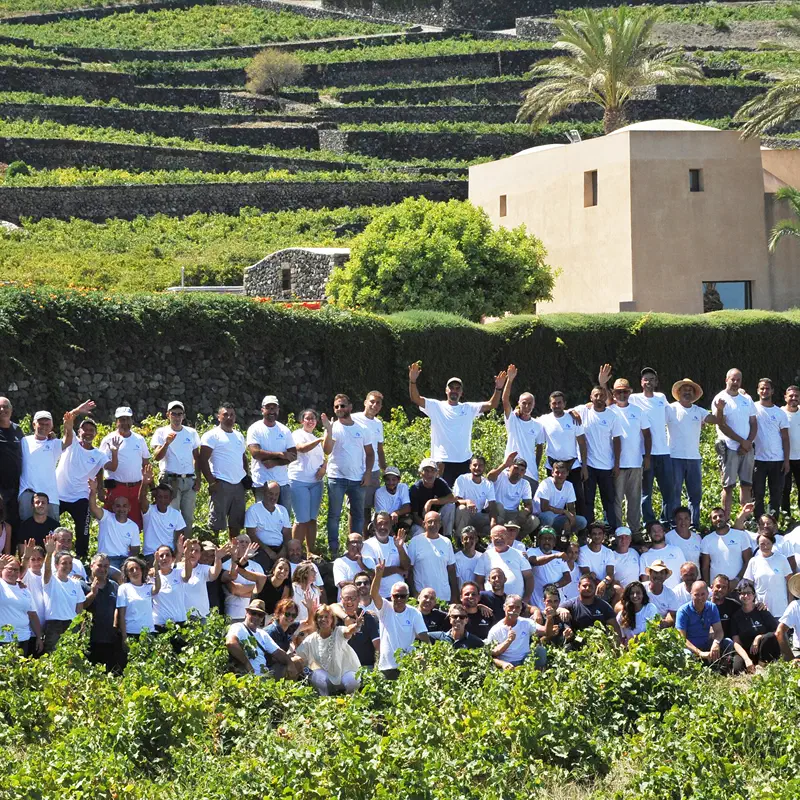
On Pantelleria, the volcanic island between Sicily and Africa, Donnafugata pursues a form of heroic viticulture set within a landscape of extraordinary character.
Here, agriculture and nature coexist in a delicate yet essential balance. Olive groves, caper plantations and vineyards interact with the Mediterranean maquis, creating a mosaic of vegetation that is not only a distinctive landscape but also a complex ecosystem.
The relationship between natural habitats and cultivated land provides fundamental benefits, from soil conservation and pollination to natural pest control and climate regulation. Biodiversity thus becomes a tangible resource for a more sustainable and environmentally sensitive form of agriculture.
The Cammino di Khamma trail, which winds through centuries-old olive trees, caper bushes and natural vegetation, tells the story of this harmonious relationship between the agricultural and natural landscape. It is an example of how respect for the environment is not only a value for the winery, but a shared asset for the entire territory.
On Pantelleria, in 2008, Donnafugata also restored a Giardino Pantesco (Pantellerian Garden) and donated it to FAI. The Donnafugata Giardino Pantesco shelters a centuries-old orange tree and is a remarkable example of the Mediterranean tradition of the walled garden, designed to create favourable microclimatic conditions even without irrigation, protecting the tree from the two main threats to its survival: wind and water scarcity. This garden bears witness to human ingenuity in creating a self-sustaining ecosystem in an extremely arid environment, bringing together history, agriculture and sustainability in a small miracle of nature.
Cultivating beauty
The Donnafugata gardens reflect a vision of sustainability built on practical actions, care for the landscape and the enhancement of biodiversity. Each green space is created with the aim of fostering a dialogue between nature, agriculture and culture, transforming a winery visit into an experience that engages all the senses.